
OMALO
Grégoire Eloy
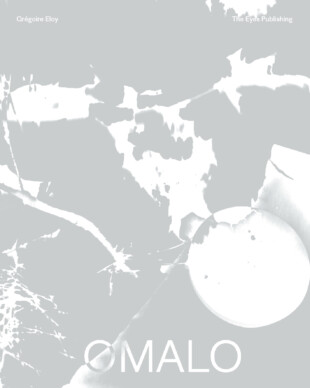
OMALO
GRÉGOIRE ELOY
October 2022
24 x 30 cm
96 pages
Languages: French and English
Images: b&w photographs
Texts: Grégoire Eloy and Sylvain Besson, Director of collections, Nicéphore Niépce Museum
40€
Available in collector edition
Published within the framework of the Niepce Prize 2021 to which The Eyes is associated by the production of a limited edition offered to the winning artist.
ISBN: 979-10-92727-53-1
This book is published as part of the Prix Niépce, with which The Eyes Publishing has been associated since 2019.
The publishing house offers the winner the publication of a limited artist’s edition of 400 copies. Limited editions are supported by the Picto Foundation. In 2021, the Niépce Prize was awarded to Grégoire Eloy.
OMALO presents a series of photograms taken by Grégoire Eloy during a residency in Georgia. The photographer explores time, memory, and life in this remote region of the Caucasus, while continuing to offer us his vision and questions about the image itself.
Alternating between photograms and their contextualization, Grégoire Eloy challenges our perception of what an image is: each shot results in a photogram (the effect of flash light on photosensitive paper placed in space) and a view of the contextualization (image captured by the camera).
Extending this sense of the image from within and without, or more broadly of what the image is, the book’s layout offers a journey that subtly plays on these different surfaces of photography.
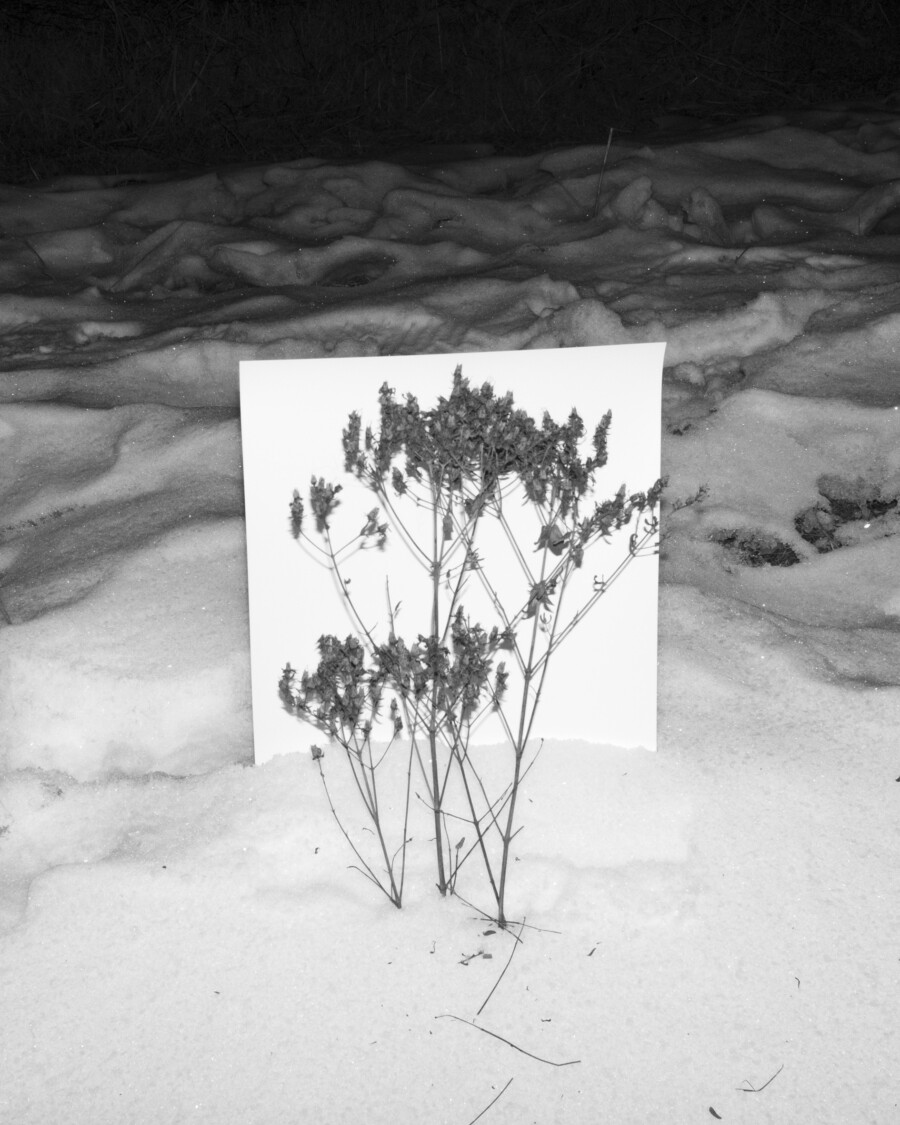
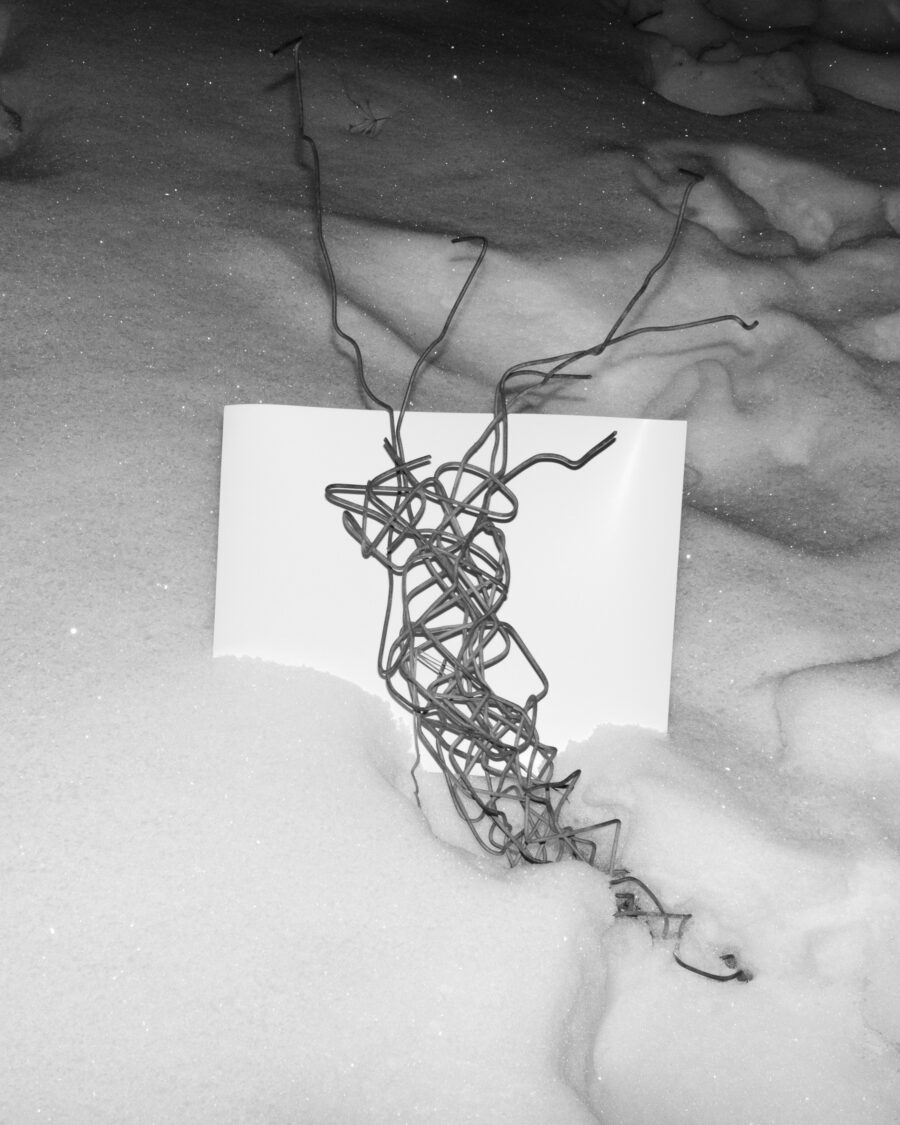
© Grégoire Eloy – OMALO – Tendance Floue
* photographic image obtained without using a camera, by placing objects on a photosensitive surface.
OMALO presents a collection of photograms from a series of 30 unique prints, created by photographer Grégoire Eloy in 2019 and 2020 in the Caucasus region of Georgia, as part of the Tbilisi Photo Festival residency.
The photographic paper is placed in the landscape at night, illuminated by a red headlamp, and exposed by the camera’s flash.
Two images of the same moment are then created: one of the shutter release bringing the scene into view, and the photogram itself.
The photographic paper is then developed on site, in a makeshift nighttime laboratory. The photogram thus becomes an “imprint of the landscape” produced and developed entirely in situ.
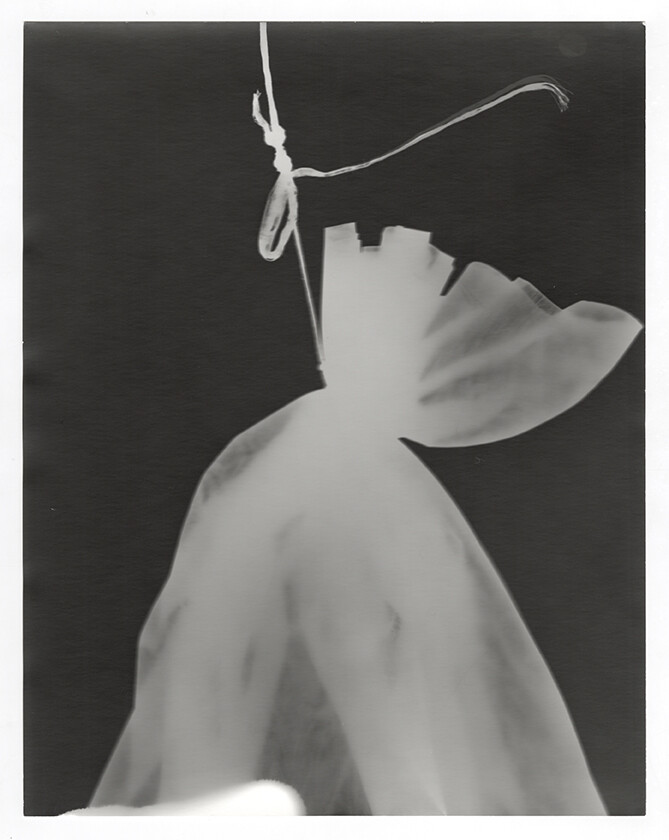
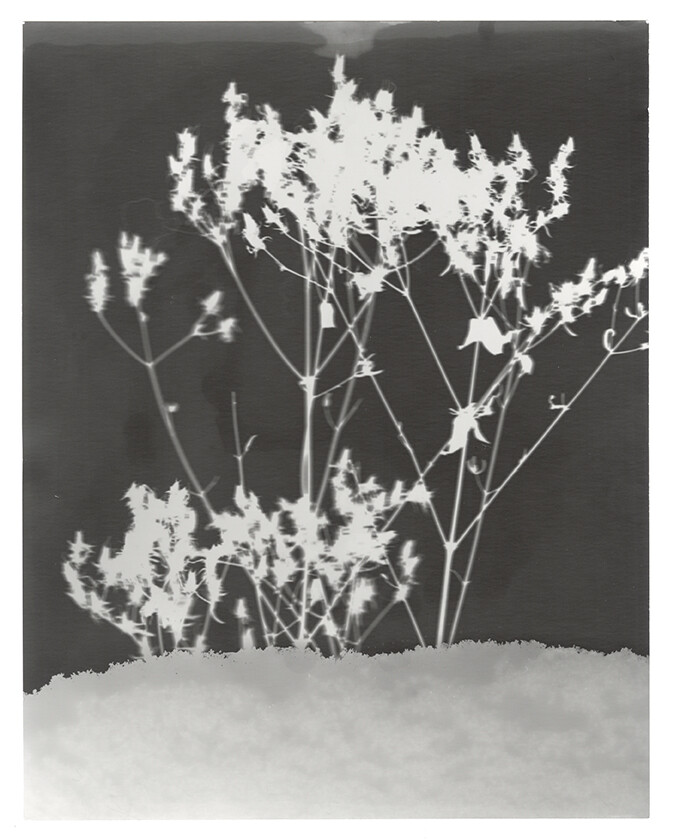
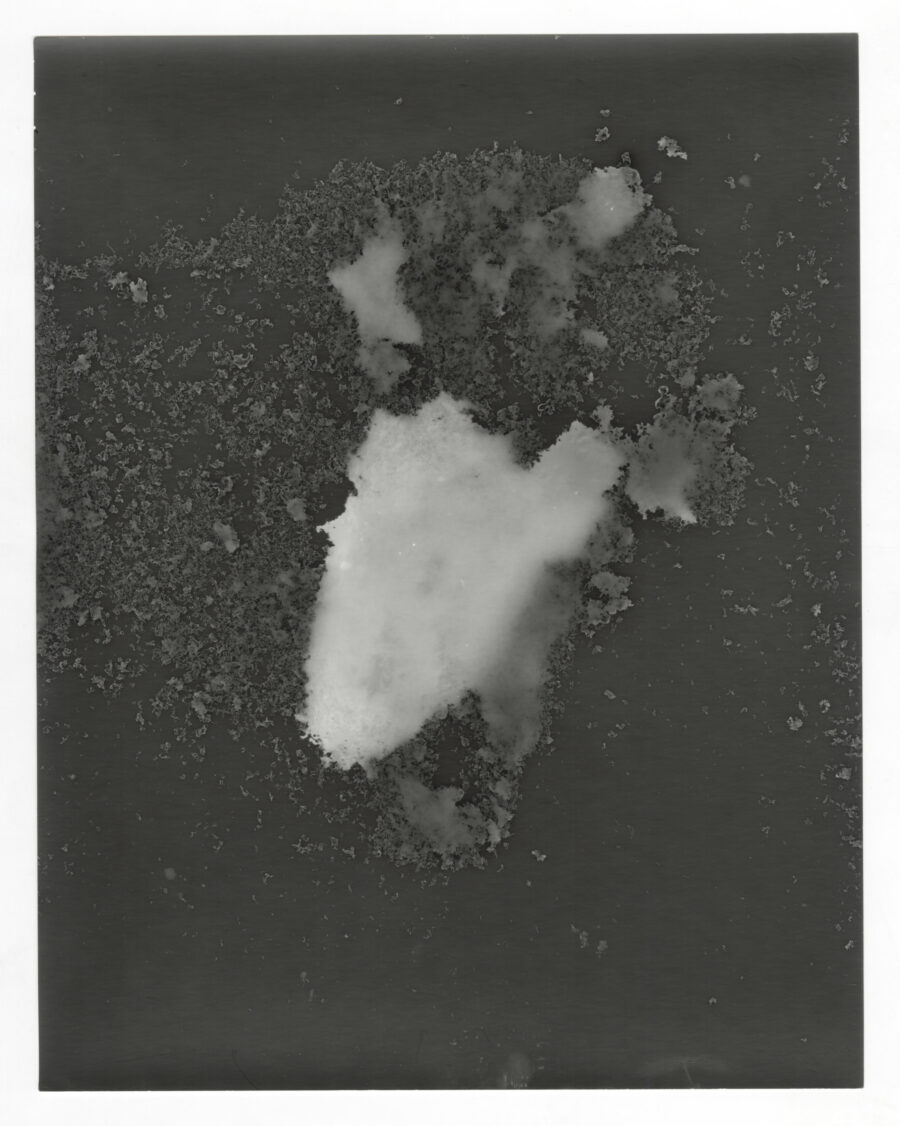
© Grégoire Eloy – OMALO – Tendance Floue
“The ‘Georgigrams’, as Grégoire Eloy calls them, are a contemporary synthesis of the sometimes conflicting dialogue between digital and film photography. Exploring the village of Omalo at night, Grégoire Eloy places blank photographic paper under or behind objects, plants, etc. When he releases the shutter of his digital camera to take a picture of the still life, the flash light exposes the paper, thus creating the “georgigram.” Two photographs are produced: the digital file and the film photogram. Two distinct and complementary ways of capturing reality, of appropriating it, two ways of rendering it.”
Sylvain Besson, Director of Collections at the Nicéphore Niépce Museum
about GRÉGOIRE ELOY

© Gégoire Eloy, Tendance Floue
Born in 1971, Grégoire Eloy has been a documentary photographer since 2003. For 10 years, he traveled throughout Eastern Europe and Central Asia for long-term projects on the Soviet legacy and the wars in the South Caucasus, notably his series Les Oubliés du Pipeline (The Forgotten Ones of the Pipeline, 2006) and Ressac (Backwash, 2008-2013).
Read more
In 2010, he collaborated with the scientific community on a trilogy about the science of matter, which was the subject of a series of monographic books including A Black Matter (Journal 2012) and The Fault (RVB Books, 2017). The final installment, on glaciology, is currently in progress.
Since 2015, he has been exploring our relationship with the environment and the wild during immersive residencies in natural settings: Residencies at the Guernsey Photography Festival (2016-2017), the Tbilisi Photo Festival (2018-2020), the Champ des Impossibles (2020-2022), and the L’Homme et la Mer festival in Guilvinec (2021). In 2022, his career was recognized with the Prix Nièpce Gens d’Images award.
Discover
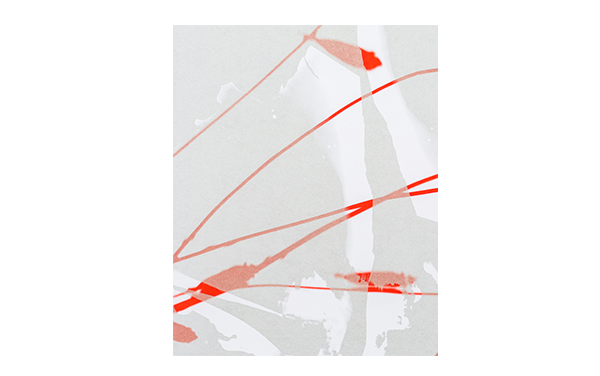
OMALO (COLLECTOR EDITION)
GREGOIRE ELOY
15 copies.
The book completed with 3 original black & white prints of photograms, an inserted color print and overprints of the photograms on the cover and some leaves of the book.
Finished with a glued square spine and visible stitching.
450€
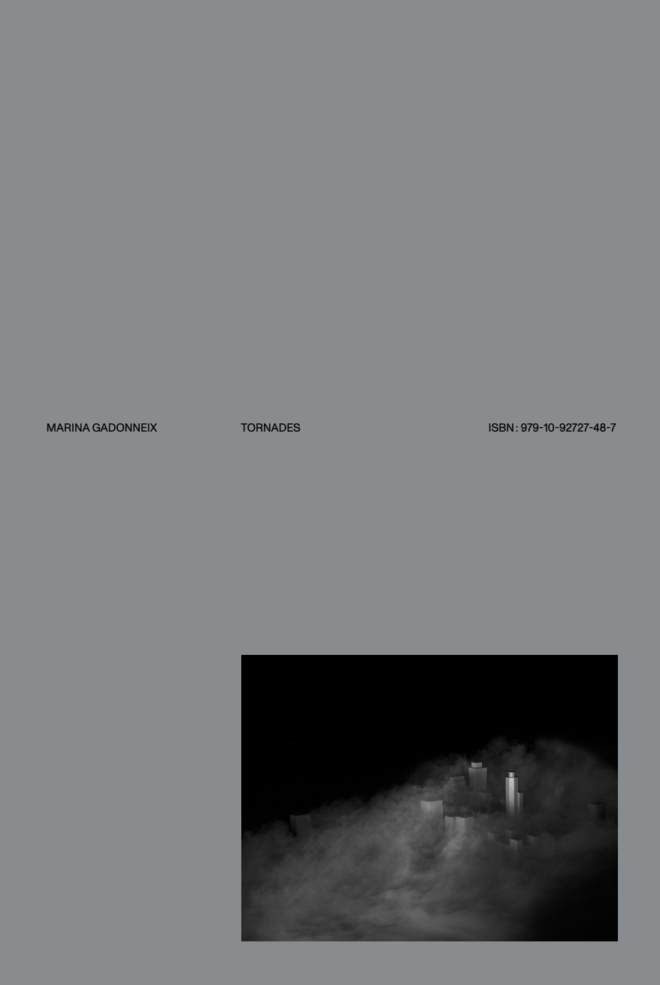
TORNADES
This book is published within the framework of the Niépce Prize, with which The Eyes Publishing is associated since 2019. The publisher offers the winner the publication of an artist's edition limited to 400 copies.
In 2020, the Niépce Prize was awarded to Marina Gadonneix.
EQUATION OF TIME
The Eyes collaborates with Raphaël Dallaporta, winner of the Prix Niépce 2019, on the project Equation of time, conducted by the artist since 2018 in partnership with the Observatoire de Paris.
39€